

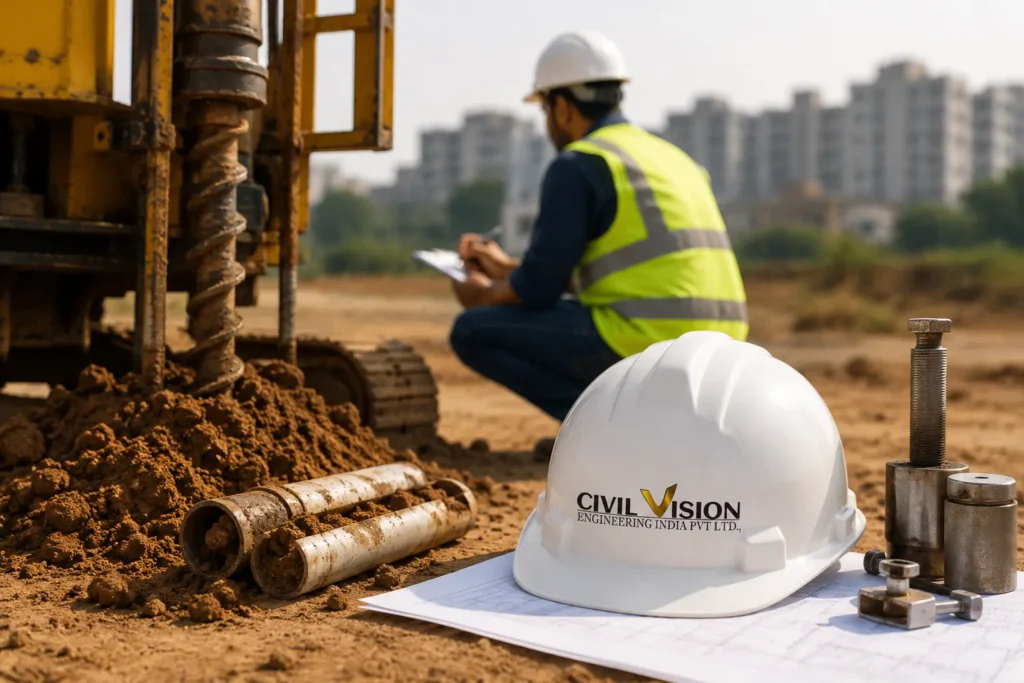
Planning to build a house, apartment, commercial building, warehouse, or factory in Bangalore?
Before finalizing the foundation design or starting excavation work, there is one important step that should never be ignored — soil testing.
Many property owners focus on architectural drawings, approvals, and construction budgets, but the actual strength of a building starts from the ground it stands on. No matter how good the design is, if the soil condition is not properly understood, it can lead to foundation problems, cracks, settlement, and unnecessary construction costs later.
That’s why soil testing before construction is considered one of the most important steps in any building project.
Why Soil Testing Matters Before Construction
Every plot is different.
The soil in one area of Bangalore may be completely different from the soil just a few kilometers away. Some locations have hard strata with good bearing capacity, while others may contain loose soil, clay layers, filled-up land, or high groundwater levels.
Without proper soil investigation, engineers are forced to make assumptions while designing the foundation.
A professional soil testing report provides actual site data that helps engineers make informed decisions instead of relying on guesswork.
What Does a Soil Testing Report Tell You?
A soil investigation report helps identify:
- Soil type and soil layers
- Safe Bearing Capacity (SBC)
- Groundwater level
- Settlement risks
- Soil strength
- Foundation recommendations
- Construction precautions
This information helps structural engineers design foundations that are safe, economical, and suitable for the site conditions.
Common Soil Tests Conducted Before Construction
Depending on the project size and site conditions, soil investigation may include:
1. Borehole Drilling
Boreholes are drilled to understand the soil profile at different depths.
2. Standard Penetration Test (SPT)
One of the most commonly used tests for determining soil strength and bearing capacity.
3. Safe Bearing Capacity (SBC) Testing
Helps determine how much load the soil can safely support.
4. Soil Sampling and Laboratory Testing
Samples are collected and tested to understand moisture content, density, plasticity, and other engineering properties.
How Soil Testing Helps Foundation Design
Foundation design should always be based on actual soil conditions.
A soil report helps engineers decide:
- Foundation depth
- Foundation type
- Load-bearing capacity
- Ground improvement requirements
- Construction methodology
This ensures the structure performs safely throughout its life.
Problems That Can Occur Without Soil Testing
Skipping soil testing may save a small amount initially, but it can create much bigger expenses later.
Some common issues include:
1, Foundation Settlement
Uneven settlement can lead to structural distress and repair costs.
2. Wall Cracks
Poor foundation performance often results in cracks in walls and structural elements.
3. Water-Related Problems
Unexpected groundwater conditions can affect excavation and foundation work.
4. Increased Construction Costs
Without soil data, foundations are often overdesigned or redesigned during construction.
Why Soil Conditions Vary Across Bangalore
Bangalore has a mix of rocky formations, clayey soil, filled-up land, and weathered rock formations.
Areas developed on old lake beds, filled plots, or low-lying regions may have completely different soil behaviour compared to rocky zones.
This is why soil testing is recommended even if nearby plots have already been developed.
Every site should be evaluated individually before construction begins.
When Should Soil Testing Be Done?
The ideal time for soil testing is before:
- Foundation design
- Structural design
- Excavation work
- Finalization of construction drawings
The earlier the testing is completed, the easier it becomes to plan the project correctly.
Choosing a Soil Testing Company in Bangalore
When selecting a soil testing company, look for:
- Experienced geotechnical engineers
- Accurate testing procedures
- Timely reporting
- Site-specific recommendations
- Reliable technical support
Build on a Strong Foundation
A successful building project starts long before concrete is poured. Understanding the soil beneath your site helps engineers design safer foundations, reduce risks, and improve long-term building performance.
If you’re planning construction in Bangalore, soil testing should be one of the first steps in your project journey. A small investment in soil investigation today can help avoid costly problems tomorrow.
A detailed soil investigation report helps engineers, architects, builders, and property owners make better construction decisions from the very beginning.
Contact Civil Vision Bangalore for today for expert soil testing, structural design, NDT services, 3D modeling and structural engineering services.
FAQs
- Is soil testing required before house construction?
Yes. Soil testing helps determine soil strength and provides important information for foundation design.
- What is SBC in soil testing?
SBC stands for Safe Bearing Capacity. It indicates how much load the soil can safely support.
- When should soil testing be conducted?
Before foundation design and before starting excavation work.
- Can soil conditions affect construction costs?
Yes. Soil conditions directly influence foundation type, excavation requirements, and structural design decisions.